One-person company branding with AI
36% of new startups now have a single founder. Here's how they're building brands that punch way above their weight.


The numbers are hard to ignore
In 2019, about one in four new startups had a solo founder. By mid-2025, it was more than one in three. That shift happened fast, and it happened for obvious reasons: AI tools got cheap, remote work became normal, and a generation of builders decided they'd rather own 100% of something small than 15% of something that might never work.
The US alone has close to 30 million solopreneurs now. They contribute roughly $1.7 trillion to the economy - about 6.8% of total output. That is not a niche. That is a workforce.
Source: Carta Solo Founders Report, 2025
$1.7T
Annual economic contribution of US solopreneurs
Founder Reports, 2025
84%
US businesses with zero employees
US Census Bureau
52.3%
Successful exits achieved by solo founders
Carta, 2025
And here is the stat that gets people's attention: 52.3% of successful startup exits were solo-founder companies. More than half. The old wisdom that you need a co-founder to succeed? It looks more like a relic every year.
Anthropic CEO Dario Amodei gave the first billion-dollar one-person company a 70-80% chance of appearing by 2026. Whether or not that specific prediction lands, the direction is clear. Solo is viable. Solo might be optimal.
Why brand matters more when it is just you
A ten-person startup can afford a mediocre brand for a while. They have salespeople who build relationships, support staff who earn trust, and enough presence to feel real even if the website is bad.
A one-person company gets none of that. Your brand is doing the work of every department you don't have. It answers "who are you?" before anyone talks to you. It answers "can I trust this?" before anyone reads your docs or tries your product.
This is not about logos and color palettes. Brand for a solo founder is the total impression you leave: name, website, tone of voice, how your product looks, what your emails sound like. When done right, nobody thinks about company size. When done wrong, everything feels like a side project.
Maor Shlomo built Base44 alone. The product, the brand, the growth. Six months after launch, Wix acquired it for $80 million. 250,000 users. His monthly profit hit $189,000 before the deal closed. The brand did not look like a one-person operation because it wasn't built like one - it was built with the same AI tools available to any solo founder reading this.
The $500/month brand department

What used to require a branding agency and a six-figure budget now fits into a monthly software bill smaller than a junior designer's daily rate.
| Brand function | Traditional cost | Solo founder AI stack | Monthly cost |
|---|---|---|---|
| Brand naming | $15K-50K agency | AI naming tools + domain checkers | $0-30 |
| Logo and visual identity | $5K-25K designer | Midjourney + Canva Pro + Figma | $30-50 |
| Website copy | $3K-10K copywriter | Claude / ChatGPT + your editing | $20-40 |
| Content marketing | $4K-8K/mo agency | AI writing + Canva for graphics | $30-50 |
| Customer support | $3K-5K/mo hire | Intercom Fin / Chatbase | $50-100 |
| Market research | $10K-30K consultant | AI research + Google Trends | $0-20 |
Source: author estimates based on 2026 market rates
Danny Postma runs HeadshotPro from Bali. Solo. $300,000 a month in revenue, $3.6 million ARR. Before that, he built and sold Headlime for $1 million in eight months. His entire operation - brand included - runs on AI tools and his own judgment.
The total cost of a solo founder tech stack in 2026 sits between $3,000 and $12,000 per year. That is a 95-98% reduction compared to hiring the people these tools replace.
Solo AI-powered businesses vs traditional startups at similar revenue (Grey Journal, 2026)
Operating margins for solo AI-powered businesses run 60-80%, compared to 10-20% for traditional startups at the same revenue level.
Those margins are not just nice. They are what makes the whole model work. You can afford to grow slower, pick your customers, say no to bad deals. The brand becomes an asset rather than a cost center.
Start with the name (it is harder than you think)
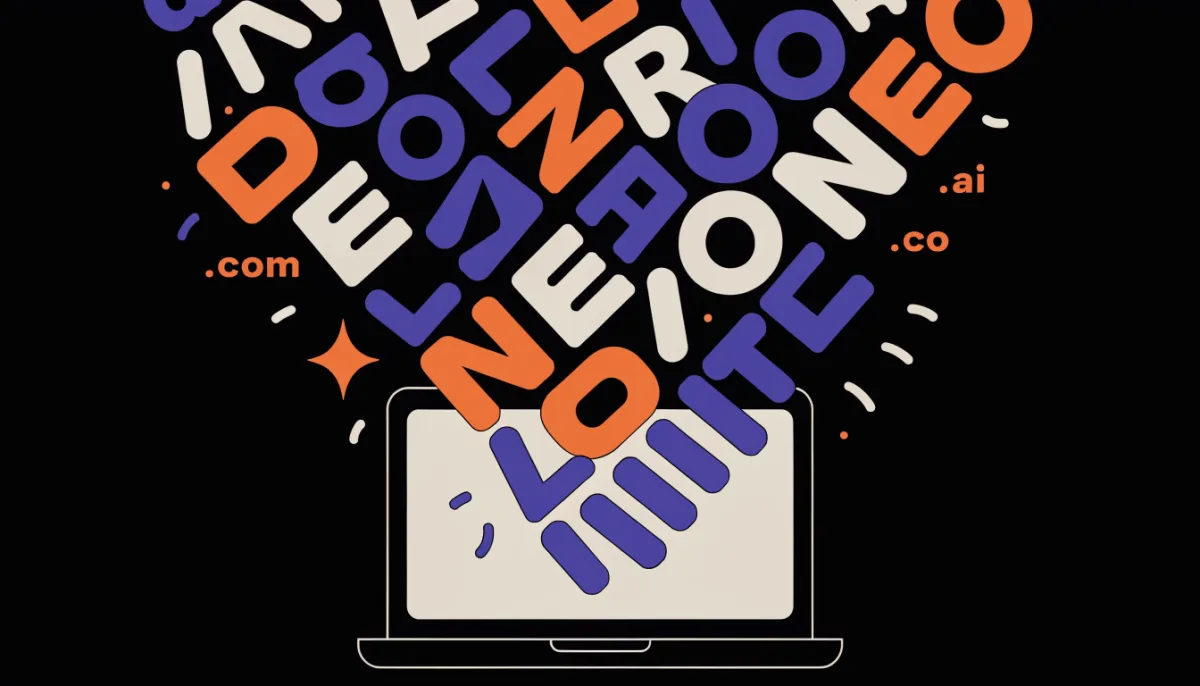
Every solo founder knows the pain. You have the product idea, maybe even a working prototype, and you are stuck on the name. You have been stuck for two weeks. Your friends are tired of being asked. The good .com domains all cost $10,000.
Naming is where most solo founders lose the most time relative to the importance of the decision. Not because the name does not matter - it does - but because the process is inefficient. You sit there trying to be creative in a vacuum, which is the worst possible way to generate good options.
What works better: give yourself constraints and volume. Generate 50-100 candidates in an afternoon using AI, check domain availability instantly, narrow to five, test with real people. The name you end up with is almost never the one you thought of first, and it is usually better.
Shopify
E-commerce platform
Scott Lake combined "shopping" and "simplify." The company was originally called Jaded Pixel. Good thing they changed it - "Jaded Pixel" does not exactly scream "build your online store here."
Canva
Design platform
Started as Canvas Chef. An engineer mentioned that "canvas" sounds like "can-va" in French. Sometimes the best names come from accidents in other languages.
Stripe
Payments
Went through /dev/Payments (too geeky), then Stack (domain too expensive), before landing on Stripe. The word had no existing brand associations, and the connotations - racing stripes, magnetic stripe on cards - worked in their favor.
Etsy
Handcraft marketplace
Founder Rob Kalin wanted a "nonsensical word" so he could build meaning from zero. He heard "et si" while watching a Fellini film. Building a brand around a blank-slate word takes more work upfront but gives you total ownership of the association.
Notice a pattern? None of these names explain what the product does. They are short, pronounceable, and either invented or borrowed from unexpected places. The explanation comes from everything else - the website, the product experience, the content.
Tip
If you are stuck between two names and both are "fine," go with the shorter one. In the one-person company world, you are your own sales team, and you will say this name thousands of times. Every syllable counts.
Naming strategies that work for solo founders
Looking at how successful one-person companies actually named themselves, a few approaches keep showing up.
| Strategy | How it works | Examples | Best for |
|---|---|---|---|
| Mashup | Combine two short words | Shopify, Gumroad, Basecamp | Products with clear use cases |
| Truncation | Shorten a real word | Canva (Canvas), Kit (ConvertKit) | When the full word is too generic |
| Borrowed word | Use a word from another context | Stripe, Notion, Slack | Tech products that want warmth |
| Invented word | Create something new | Etsy, Calendly, Zapier | When you want total brand ownership |
| Personal name | Build under your own name | Seth Godin, Justin Welsh | Creator-led, expertise-based businesses |
Based on analysis of 50+ successful solo-founded companies
The strategy you pick depends on what you are building. A SaaS product usually benefits from a separate brand name - something that can live on its own. A consulting practice or content business often works better under your personal name, since trust is tied to you specifically.
One thing I would avoid: names that imply a team when there is no team. "Collective," "Labs," "Studios" - these words create an expectation that the About page will not match. Better to lean into the solo angle. One person who is really good at one thing is a perfectly valid value proposition.
Basecamp
Project management
Originally 37signals (named after extraterrestrial radio signals). Renamed in 2014 to focus on their one product. The name suggests a starting point, a home base - perfect for a tool that keeps projects grounded.
Gumroad
Creator economy
Sahil Lavingia built it solo, almost ran out of money, chose not to raise more VC, and turned it into a profitable business. "Gumroad" is two syllables, easy to remember, and has a texture to it that corporate names lack.
eBay
Marketplace
Pierre Omidyar's consulting firm was Echo Bay. The domain was taken, so he shortened it. Sometimes constraints produce better results than unlimited options.
Calendly
Scheduling
Tope Awotona emptied his retirement savings and maxed out his credit cards to build this. The name is descriptive (calendar + -ly suffix) but light enough to not feel boring. Bootstrapped to profitability with no outside money.
Beyond the name: building a full brand solo
A name without a brand system around it is just a word on a domain registration. So what comes after? This is roughly the order that works for most solo founders.
Step one is the name plus domain. Get both locked before you do anything else. Check social handles at the same time. If the .com is gone, .co, .io, and .ai all work for tech products. Do not pay $10,000 for a premium domain when you are pre-revenue.
Step two is a simple visual identity. Not a full brand guide - just a logo, two colors, and one font. Canva or Figma plus an AI image generator can produce something that looks professional in an afternoon. The bar is "does not look amateurish," not "wins design awards."
Step three is your website. One page is enough at the start. Hero section, what you do, who it is for, a call to action. Tools like Framer, Webflow, or even a Next.js template if you code. AI can write the first draft of copy. You edit it until it sounds like something you would actually say out loud.
Step four is voice. How does your brand talk? This matters more than the logo, honestly. Read your homepage copy out loud. If it sounds like a press release, rewrite it. Solo founder brands that succeed tend to sound like a competent person talking - not a marketing department performing.
Info
64% of solopreneurs already use AI for marketing, and 37% use it for customer support (Gusto, 2025). The ones who build the best brands use AI for the first draft of everything, then edit to add their own perspective and personality. The editing is what makes it yours.
What the numbers look like in practice
The solopreneur income distribution is wide. Average annual earnings sit around $39,000 - but that includes every side hustler and part-timer in the data. Among those who treat it as a real business, 77% reach profitability in their first year. And 3.6% cross the million-dollar mark.
77%
Solopreneurs profitable in year one
Gusto, 2025
$39K
Average solopreneur annual income
Comparably/QuickBooks
3.6%
Solopreneurs earning $1M+
Comparably/QuickBooks
The gap between average and top tells you something. The seven-figure solopreneurs almost always have a clear brand, a specific audience, and systems that run without them babysitting every step. AI tools alone do not explain the difference, but they shrink the distance between what one person can ship and what used to take a team of five.
56% of current solopreneurs launched after 2020. This is not a mature, stable population - it is a wave that is still building. Many of them are still figuring out their brand. That is both the opportunity and the challenge.
The solo founder's brand checklist
If you are building a one-person company right now, this is the sequence I would follow:
Name and domain first. Use an AI naming tool to generate volume, not to make the final decision. The best names come from AI suggestions that you then twist, combine, or react against. Check domain and social availability before you get attached to anything.
Visual identity next. Keep it simple. One logo mark, two brand colors, one typeface. You can always evolve it later. Spending three weeks on a logo when you have no customers is a form of productive procrastination.
Website that says what you do. Not what you aspire to do, not your mission statement, not your origin story. What does this thing do and who is it for. One page. Ship it.
Content voice that sounds like you. Write one blog post or newsletter issue. Read it out loud. If it does not sound like something you would say to a friend who asked "what are you working on," start over.
Then iterate. Everything above will change in six months when you know more about your customers. That is fine. The point is to have something real in the world, not to have something perfect in your head.
Notion
Productivity
Ivan Zhao and his co-founder moved to Kyoto to rebuild the entire product. They picked a name that is just an English word - "notion" means an idea, a concept. Simple, but it carries weight because the product behind it is excellent.
Kit
Email marketing
Nathan Barry built ConvertKit solo, bootstrapped it to over $30M ARR, then renamed it to just Kit. Shorter. Cleaner. The rebrand was a bet that the brand had outgrown its descriptive name.
Where this is going
Amodei's prediction about a billion-dollar one-person company might sound like hype. But look at what already happened. Base44 went from zero to $80 million exit in six months. HeadshotPro does $3.6 million a year with one person. The ceiling keeps moving.
Here is what I keep coming back to: branding might be the real moat. AI tools are available to everyone. Same with no-code builders, distribution channels, payment processors. If everyone has the same building blocks, the difference is what you build on top. And that is the brand.
A memorable name. A clear voice. A visual identity that feels considered rather than default. These compound over time in ways that are hard to measure but easy to feel. And they are the things AI can assist with but cannot do on its own. You still need taste. You still need to know your people. You still need to make calls that feel like they came from a specific person with specific opinions.
I am not sure how long the current pace of change holds. Maybe solo companies hit a ceiling at $10M and need to hire after all. Maybe not. What I do know: the founders who invest in their brand early, while competitors are still shipping feature lists with default Tailwind styling, are the ones who get remembered. And getting remembered is what a brand is for.
References and sources
- Carta Solo Founders Report, 2025 - solo founder share of new startups rising from 23.7% to 36.3%
- Gusto - Main Street Meets Machine Learning, 2025 - small business AI adoption rates and productivity data
- Gusto - Behind the Boom in Solopreneurship, 2025 - solopreneur formation trends and income data
- US Census Bureau - Nonemployer Statistics - 84% of US businesses with zero employees
- Comparably - Solopreneur Salary Data - solopreneur income distribution
- Anthropic CEO Dario Amodei predicts billion-dollar solopreneur by 2026 - Inc. article covering the prediction
- Dario Amodei prediction tweet - 70-80% probability of billion-dollar one-person company
- TechCrunch - Base44 sells to Wix for $80M - acquisition details
- Maor Shlomo acquisition announcement - Base44 founder's tweet thread on the Wix deal
- John Collison x Pieter Levels conversation - $3M/year as a one-person company
- Andrej Karpathy on solo founder model - AI making the solo micro-entrepreneur model viable
- Pieter Levels on hit rate - only ~5% of 70+ projects succeeded
- Danny Postma / HeadshotPro - $300K/month revenue breakdown
- Sahil Lavingia / Gumroad - from VC to bootstrapped profitability
Create Your Own Brand Name
Inspired? Let AI help you co-create a unique name tailored to your brand vision.
Start Naming - Free